

Seaside
Beside the seaside, beside the sea...
Hello readers!
I’m back! And I’m sorry it’s been so long. How have you been?
If you’re new to these newsletters (or, for that matter, you’d forgotten you’d signed up for them!), a special hello to you! I’m Janine. I’m a poet, an academic, and a BBC New Generation Thinker. And I write about…well…all sorts.
While I was away, I took the opportunity to have a little rebrand (what is Substack if not a place to try things out?). As a close reader and teacher of literature, I know that zooming in on a single word can reveal a whole constellation of meaning. But I realised that writing on Substack is no different. It’s been my approach from the beginning. Starting with just one word, holding it, circling it, and exploring it in just a little more depth has been a revealing (and fun) process for me, personally and professionally.
So I’ll continue to share the same sort of content (on life, culture, and literature), but I’m leaning into this philosophy of taking things just One Word at a Time - the new name for this newsletter.
If you want to revisit my posts on the words ‘imposter’, ‘turning’, ‘reading’, and ‘presence’, you can find them in the (tiny!) archive.
But today’s word is seaside…so if you’ve got ten minutes, grab a cuppa (or if the sun’s out, an ice-cream) and enjoy.
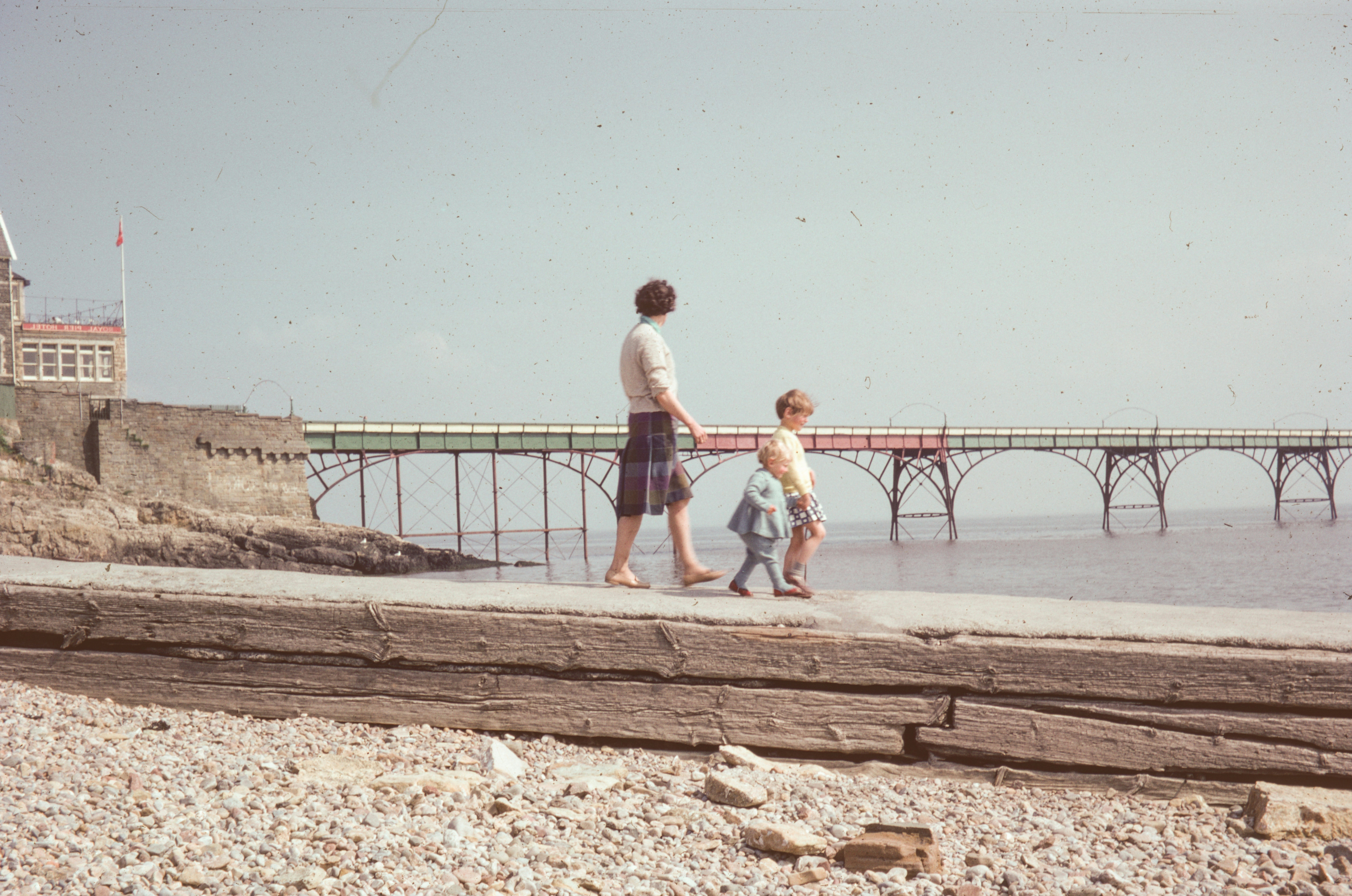
This February, I began a period of research leave - a space away from my timetabled teaching to think, read, and write. I normally have seminars and lectures during February half-term, but this year, for the first time, I didn’t - so I booked some holiday time, we packed up the kids, and we headed to the Sussex coast.
For a brief spell in the mid-noughties, Sussex was my home. I’d just graduated from university, and I was drifting…lost. I had to move out of my student house in Yorkshire, and I had no real idea where to go next. An opportunity arose to move near my extended family on the South coast and to rent a very cheap garret in a Victorian house near a street called “Seaside”.
A garret sounds romantic and artistic. This…wasn’t. Dysfunctional, noisy neighbours. No central heating and no double-glazing. I nailed big plastic sheets over the windows in the winter months to keep me warm, and the wind would force its way through any gaps, howling like a ghost at all hours. There was a kitchen sink and a small countertop, but no space for a cooker, or a washing machine, and I had no cash for white goods anyway. A cupboard had been converted into a shower room. I can’t remember where the toilet was (in another cupboard?). I was still bobbing along, unsure of my next move. But setting myself up in this little flat allowed me to lower the anchor for a bit, to take harbour, to restock.
Most nights, I cooked pasta on a cheapo tabletop hob I bought from Argos. I claimed benefits and got a job in a health food shop in a greyscale shopping centre. Here, I sold dried fruits and nuts of every kind imaginable. Raisins (golden, lexia, chocolate-covered, Chilean flame). Apricots (sulphured, unsulphured). Figs, cranberries, and goji berries. Brazil nuts and walnuts. Almonds (flaked, whole, blanched). Pecans and pistachios. I vended untold quantities of prunes to coach loads of digestively-challenged holidaymakers. I sold bucketloads of mixed fruit to Women’s Institute members (who had a 10% discount) during Christmas cake season. My favourite customers were a newly retired couple, giddy in their new phase of life together, who popped in to purchase soft liquorice to nibble on while they shopped in town. Occasionally, to our excitement, a local David Beckham impersonator would walk through the precinct (our ersatz celebrity). We’d keep boxes of saffron strands behind the till because, gram for gram, it’s worth more than gold, and I was warned that shoplifters love it (although I’m not sure where they flogged it). Sometimes, we’d offer samples of the sweet and spicy Dickensian drink Rochester Ginger in tiny plastic glasses, sneaking shots when nobody was watching. And after my shifts, I’d walk home past the old cinema my Dad must have visited as a teenager, antique and festooned with lights, and I’d climb the flights of stairs to the flat. But from my rickety sash window, if I stood in just the right spot and the sun hadn’t yet set, I could just about glimpse the English Channel.
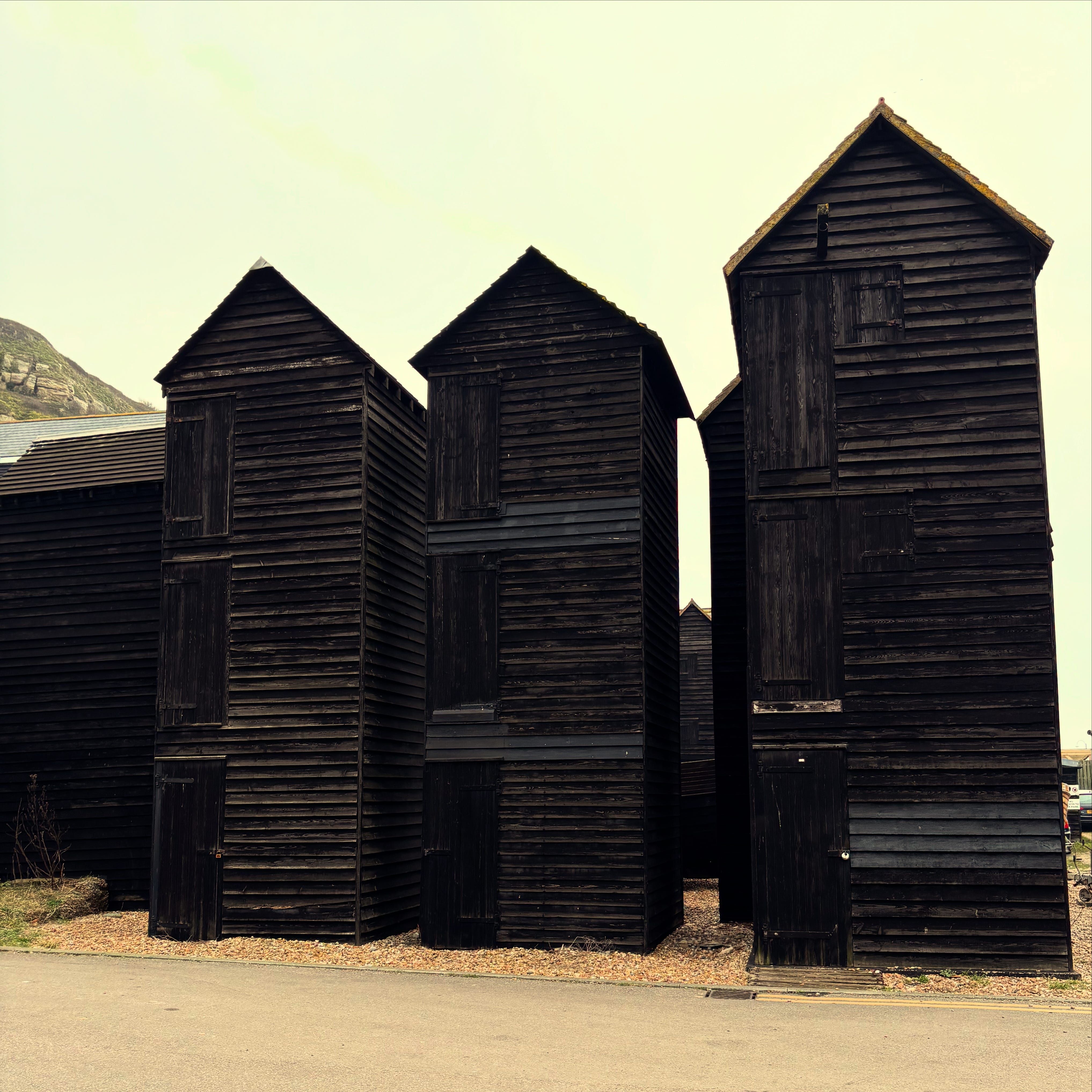
In February, I visited some of those old haunts (the shop has moved and changed name, the cinema has closed down). We ventured out to Hastings with its indulgently moody palette of slate, charcoal, & moss. I folded myself up to fit in the carriage of the miniature railway with the kids. We changed pounds into pennies at the amusements and won endless chains of ticket stub tokens. I became enchanted by all things shipwrecked and smuggled. There’s a weathered edginess to the seaside, and to Hastings in particular, with its looming cliffs. The sea there was thick, foaming, and sullen.
Like all good things, our holiday came to an end. But as we returned home, I saw an amazing poetry course advertised on Instagram by the lovely Laurie Bolger called “Writing the Seaside”. Kismet.
I cannot tell you how much fun these workshops were and how they’ve galvanised my writing (including this post). If you’re looking for an uplifting, fun, and supportive space to play with language, I highly recommend Laurie’s workshops. Among Laurie’s many talents is the way she celebrates the everyday, observing the sometimes sentimental and often uncanny iconography and ephemera of British life. Laurie writes girlhood beautifully, too. I’ve been reading her pamphlet Makeover (Emma Press, 2024) and her latest collection, Lady, has just been published with Nine Arches Press, and you can buy it here.

In the holiday let we rented in Hastings, there was this brilliant print on the wall — a photograph, poster-sized and framed, of this seagull staring directly into the camera like a right geezer. I googled it and found it was a Martin Parr print. You might already know that Parr is famous for his brilliant colour-saturated photos, and his subjects are often people at seaside resorts. His name cropped up again in Laurie’s teaching, and then just a few days after the course finished, I saw that the documentary film I am Martin Parr was screening at my local cinema. More kismet!, I knew I had to go.
I went with my Dad. We share a love of realist photography, especially portraits of people. When I was a teenager, he’d take me to The Photographers’ Gallery in London. Nowadays, we’ll head to the Baltic (or before it closed, the Side Gallery).1 The film was a delight. We grinned from ear-to-ear the whole way through. I got the sense that Martin Parr was only ever going to be Martin Parr. He was born to take those photos. Oh, and his manner and his way with people from all walks of life! What a gift to be able to take people as you find them. He likes people.
I’ve since bought a cheap, cheerful, and unreliable 1989, fixed-focus, point-and-shoot 35mm camera, and gifted my kids with disposables to practice on. I’m yearning for analogue, for the haze of colour leaks, for the blur of a soft lens, for the sound of winding and clicking and the delicious wait for the prints to be developed.2
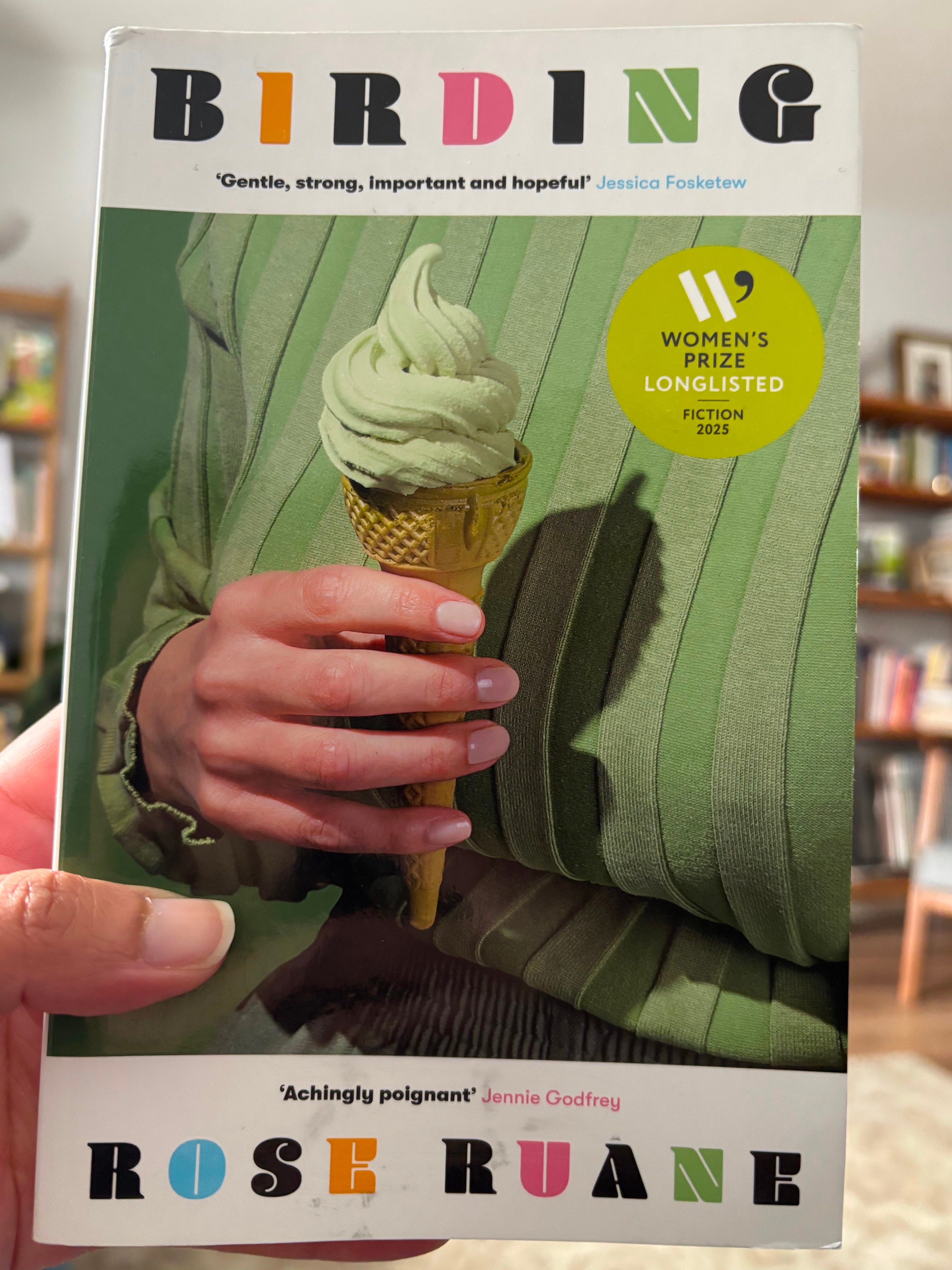
I couldn’t leave it there. I had to go back to the seaside. So over Easter, we went to Whitley Bay in Northumberland, and I squeezed in a trip to one of my favourite bookshops near the coast, The Bound. I bought a copy of Rose Ruane’s Birding, a seaside novel which, in its opening pages, is so astoundingly arresting in its use of language, I must’ve resembled a freshly caught cod as I read it on the Transpennine Express home: eyes wide, mouth parting, a-gasp. I’m only on Chapter 3.
So that’s where I’ve been…beside the seaside, beside the sea…What are your favourite British seaside resorts? Send me your recommendations.
For those of you who subscribed to this to hear a bit more about reading, I’ve written a little something for you - an essay, broadcast on BBC Radio 3 this spring, called ‘Losing Yourself in Books’. It’s about coming-of-age, girlhood, and me trying to figure out who I was (who I am). I hope you like it.
In the meantime, look at these gorgeous waves in Northumberland. That sound!
Consider this a little postcard from me to you. Until next time.
Now I think of it, when I applied to be a BBC New Generation Thinker back in 2023, I had to write a review of something not linked to my academic research. And I picked photography - I wrote about the Chris Killip retrospective at the Baltic (another brilliant photographer of the seaside).
If you’re in Sussex, the shop All Things Analogue in Eastbourne is well worth a visit.